

Counter-Strike 2 has raked in around 610 million dollars, pulling ahead of the competition by quite a bit. Specifically, the second and third-highest-grossing games, Helldivers 2 and Palworld have bagged 458 million and 378 million dollars respectively, falling behind Counter-Strike by over 50 million dollars.
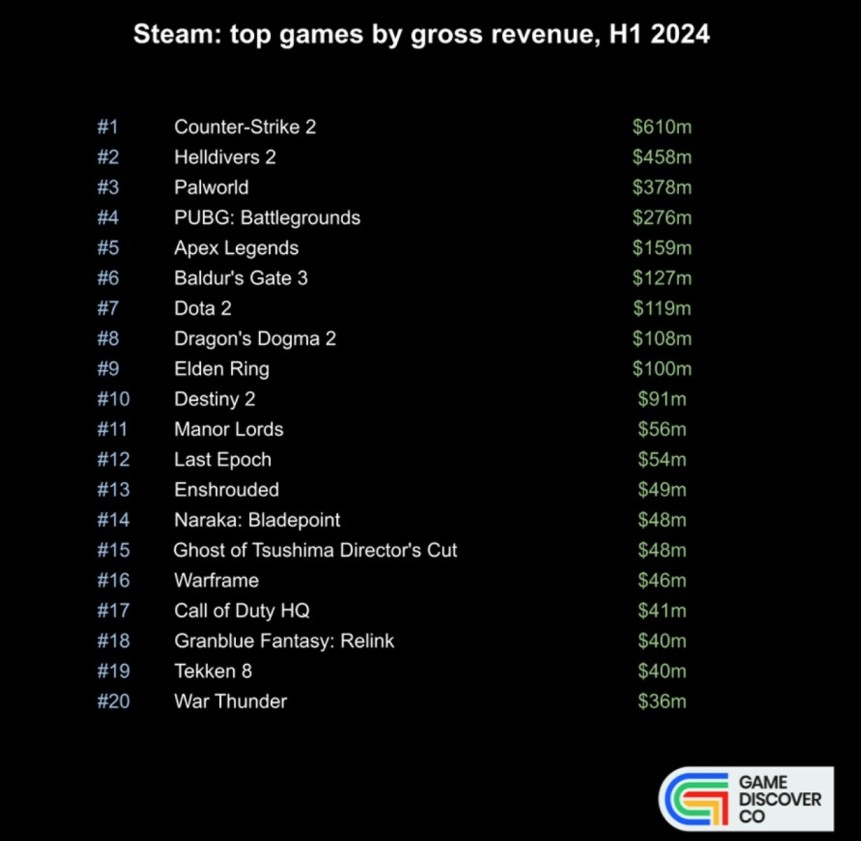
As we look at what has brought about Counter-Strike 2’s monumental success, there are two main factors involved. For one, the game is a sequel to Counter-Strike: Global Offensive, serving as a huge upgrade to the decade-old Counter-Strike experience. From having a proper anti-cheat and better net code to having better movement mechanics and stunning graphics, it’s no surprise that the CS: GO player base would largely shift to CS2, plus some more.
On the other hand, the game has earned huge profits from the cosmetic market. It’s a provably safe platform to buy, sell, and trade cosmetics for Valve’s competitor shooter, so its popularity, coupled with the minimal platform charges, have compounded to lucrative profits. On top of that, the launch of stickers representing different professional teams has also been a marketing success, with players racing to support their favorite teams.

CS2 is one of the best competitive tactical FPS games in the world right now. Most people play the game on PC, but what about those who don’t have PCs? Can they join in on the fun? Well, today, we answer that question. Let’s find out together if CS2 is available to play on Xbox and PS consoles. Get those crosshairs ready, and game on!




![Top 5 CS2 Cheats in [year]](/imgs/news_8003/20241107/cache/1730975319_fad9f983f190c7d75fc0___308_174.jpg "Top 5 CS2 Cheats in [year]")