

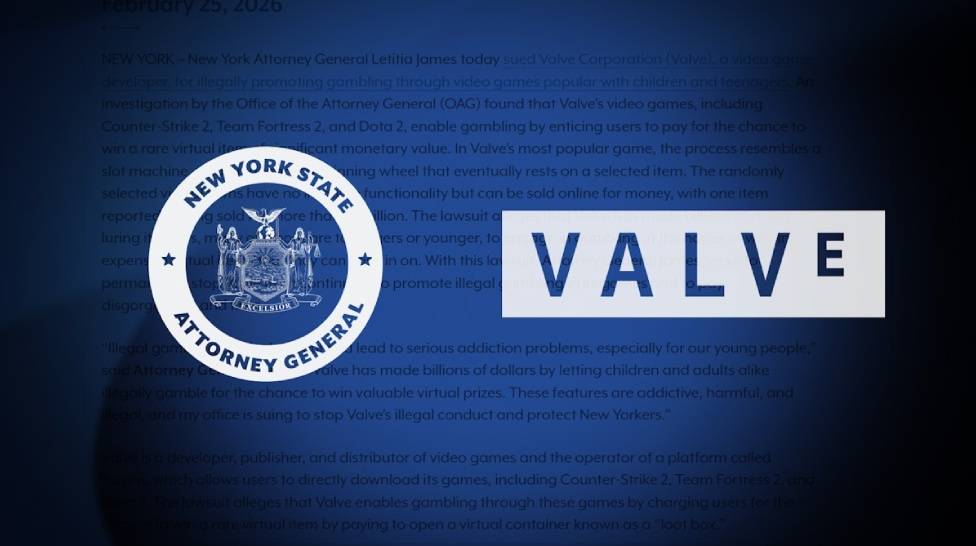
In a significant development within the esports industry, Valve Corporation has formally responded to the lawsuit filed by the New York Attorney General (NYAG), addressing allegations related to illegal betting practices. This response marks a pivotal moment for both Valve and the broader online gaming community.

In what could be described as a landmark event in the realm of cyber sports and online gaming regulations, Valve Corporation has officially issued a response to the lawsuit brought forward by Letitia James, the New York Attorney General. The lawsuit accuses Valve of facilitating and profiting from illegal betting activities associated with its widely popular game titles.
The heart of this legal battle lies in accusations directed at Valve’s supposed involvement in enabling and benefiting from unregulated gambling ecosystems. Key points raised by the NYAG include:
These charges put a spotlight on how major game developers and platforms police their ecosystems against misuse while safeguarding younger audiences.
Valve’s rebuttal sheds light on several critical arguments aiming at discrediting claims made by the NYAG. Their defense strategy emphasizes on:
This defense not only underscores the challenges faced by entities operating at the intersection of technology, law, and consumer rights but also stresses Valve’s commitment towards maintaining an ethically compliant business model.
This litigation holds considerable significance beyond just Valve or its accused titles; it interrogates fundamental aspects surrounding online gaming governance:
As both parties prepare their cases with due diligence, stakeholders across esports and tech industries await eagerly. The final verdict could herald not just immediate repercussions for Valve but potentially reshape operational standards across digital entertainment spheres globally.
While immediate outcomes remain uncertain, one thing is clear this litigation underpins evolving complexities as digital advancements outpace traditional regulatory frameworks. For everyone involved directly or indirectly with cyber sports or online gaming worlds, staying vigilant about these changes is more crucial than ever.
The continuous dialogue between pioneering companies like Valve and regulatory bodies ensures a dynamic yet stable foundation for future innovations within esports realms. Watching how this case unfolds will undoubtedly provide valuable insights into navigating future challenges intertwined with technology's relentless evolution within society's fabric.

Playing on the same maps in CS2 all the time can get boring very quickly. You go on the same maps provided by Valve, and you already know every little corner there and every strategy other players use to win. This is why the community tried to make the universe more fun and attractive. The Steam Workshop gives you more options to explore with your friends. Maps can let you relax and take a break from the competitive scene, explore, or just help you train to prepare you for more challenges. If you have never done this before, perhaps you don’t know what CS2 workshop maps to choose. This article will present ten cool options to banish boredom and give you top experiences with the game.





![Is CSGORoll Legit and Safe in [year]?](/imgs/news_8240/20250620/cache/1750408140_0f7026fdc044d94f9fb4___308_174.jpg "Is CSGORoll Legit and Safe in [year]?")

![Top 10 CS2 Workshop Maps in [year]](/imgs/news_8014/20241111/cache/1731319844_c89c5afb43f4ce03d1b3___308_174.jpg "Top 10 CS2 Workshop Maps in [year]")