


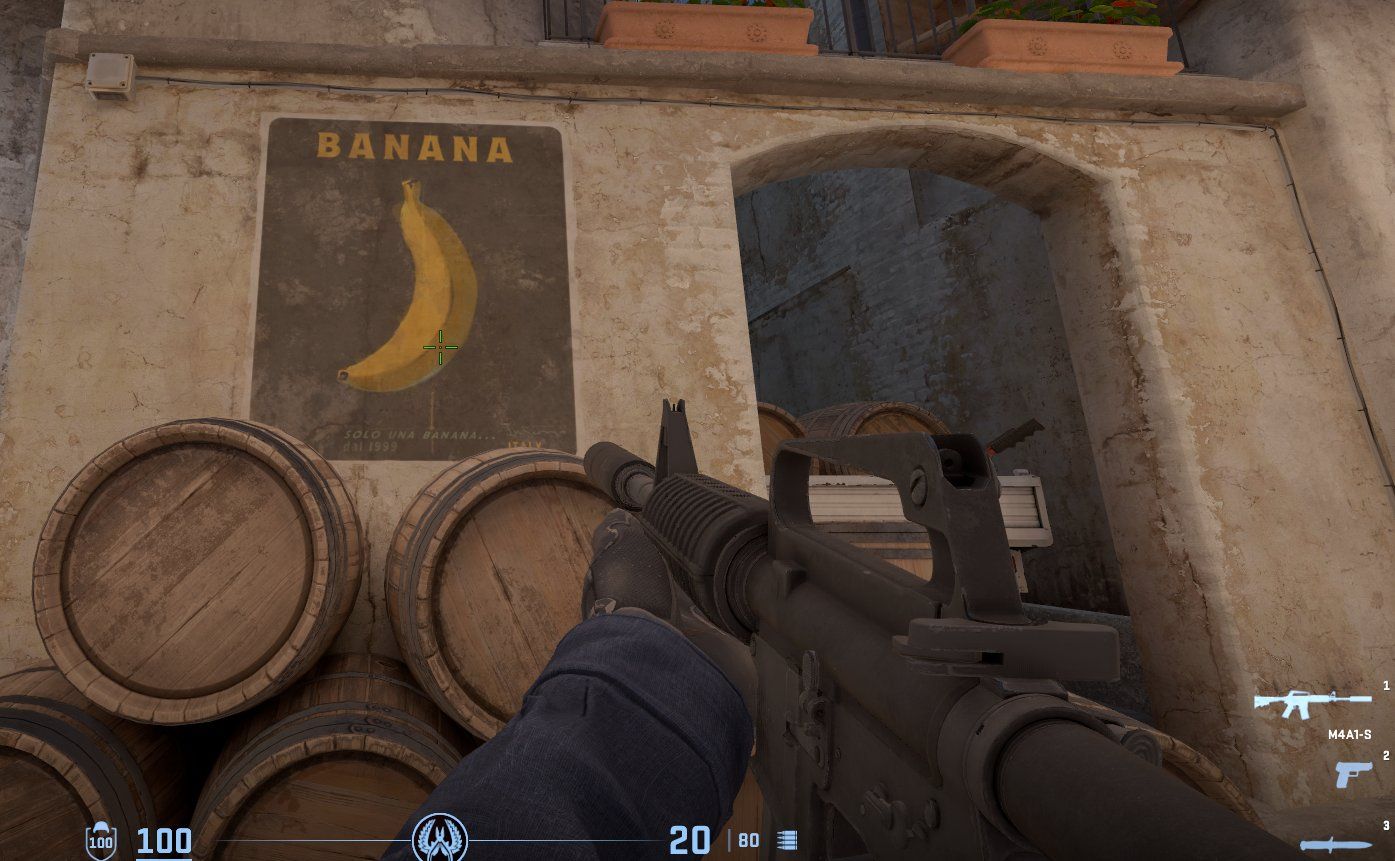
The decision to widen Banana on Inferno could have far-reaching implications for both casual players and competitive professionals alike. Traditionally, this area was infamous for its tight chokepoints that favored defensive plays and explosive utility usage. With more space now available, we are likely to witness a shift in how teams approach their offensive and defensive setups. This redesign encourages more varied strategies while potentially reducing the predictability of engagements in this critical part of the map.
The increased width of Banana allows for greater maneuverability during engagements. Teams can now execute more complex strategies without being excessively penalized by area denial utilities like smoke grenades or Molotovs. Additionally, it opens up new opportunities for sniper positions that were previously not viable due to the restricted sightlines. Moreover, it challenges teams to develop fresh approaches to control this pivotal area.
With change comes adaptation. Teams accustomed to playing a certain way around Banana might find themselves at a crossroads. Adapting quickly is key as rivals will surely capitalize on any hesitation or lack of familiarity with the updated terrain. This situation places a spotlight on teams' ability to innovate and reevaluate their playbook for not just Inferno but their overall game plan.
The ramifications of this update extend beyond casual play into the professional arena where every inch of space is crucially contested. Matches that feature Inferno could see shifts in win rates and pick/ban rates until teams fully adjust to the new dynamics offered by wider Banana. This adjustment period promises an exciting phase in CS2’s esports storyline as we anticipate creative new tactics emerging from top-tier teams.
Initial reactions within the gaming community have been mixed: some applauding the move towards more versatile playstyles while others express concerns over losing what was considered an iconic aspect of tactical positioning on Inferno. Ultimately though, it underscores developer commitment towards evolving game balance and injecting fresh strategic elements into well-established maps.
This significant change marks just one way CS2 continues to evolve strategically complex landscapes throughout its maps, ensuring long-term engagement from its player base while keeping competitive play dynamic and unpredictable. As we move forward, keen observation and open-mindedness will be crucial as both players and spectators alike navigate these changes together.

With so many case alternatives available at various price ranges, choosing the right Hellcase case becomes a daunting task. We analyzed dozens of Hellcase cases based on your budget, the quality of the item pool, and their capacity to offer sustained resale value. This guide will organize our top-case choices for 2026 by budget category and provide instructions about claiming both the daily and free cases without the myth.




![What Is Gamdom? Legitimacy, Ownership & Availability Guide ([year])](/imgs/news_8707/20260518/cache/1779104224_0fe055d4485597332592___308_174.png "What Is Gamdom? Legitimacy, Ownership & Availability Guide ([year])")
![How to 1v1 in CS2 – Key Settings in [year]](/imgs/news_8011/20241109/cache/1731181775_5ced1f6b89df1bb7d1a8___308_174.jpg "How to 1v1 in CS2 – Key Settings in [year]")
![What Are the 7 Cheapest Rust Skins in [year]?](/imgs/news_8187/20250409/cache/1744206220_d907ec12798167979171___308_174.jpg "What Are the 7 Cheapest Rust Skins in [year]?")