


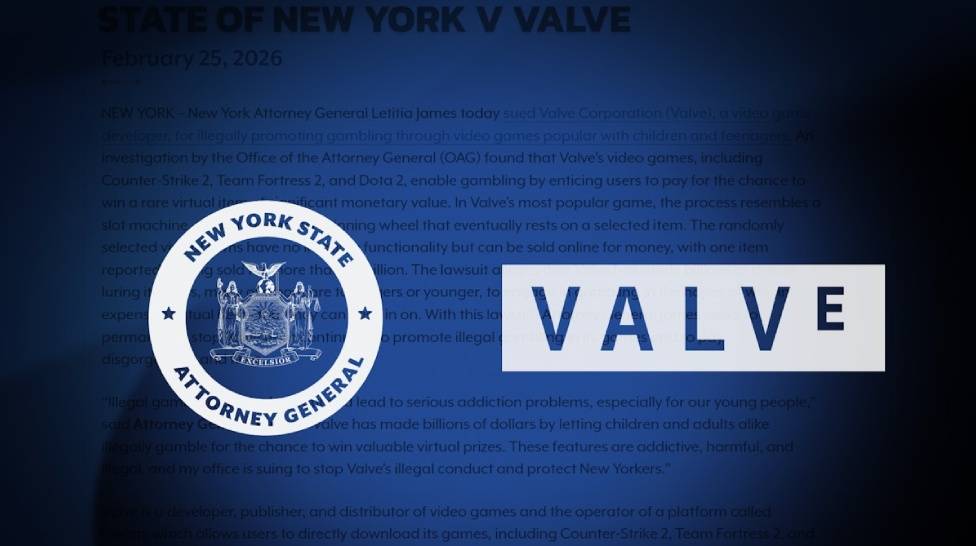
The New York Attorney General's office has initiated a lawsuit against Valve Corporation, accusing the gaming giant of promoting illegal gambling through its video games. This landmark case could significantly impact the intersection of gaming and gambling regulations.

In a surprising turn of events, the office of the New York Attorney General has filed a lawsuit against Valve Corporation. The legal action contends that Valve has facilitated illegal gambling by enabling and promoting skins betting through its video games.
Skins are in-game items that can be bought or earned in games and then traded or sold, sometimes for significant sums of money. This lawsuit is setting a precedent by directly challenging how in-game items are used outside of gameplay, blurring the lines between virtual assets and real-world value.
Skins gambling has been a controversial issue within the gaming community for years. Critics argue that it constitutes illegal wagering as players bet virtual goods with real-world value on matches or in casino-like settings on third-party websites. According to the New York AG's claims, Valve not only knew about this activity but also profited from it by taking a cut from transactions involving game skins.
This lawsuit may have far-reaching implications for gaming regulations worldwide. By targeting a major player like Valve, which owns Steam a leading digital distribution platform for PC gaming the case shines a spotlight on the regulatory gray areas surrounding online gaming ecosystems and their intersections with laws governing gambling.
The proceedings against Valve could usher in increased scrutiny over how video game companies manage their economies and whether certain activities constitute gambling under federal or state laws. Other companies watching this case may have to reconsider their policies around virtual goods and user transactions to ensure they do not fall into similar legal pitfalls.
This is not the first time video game companies have faced scrutiny over potential gambling activities; however, it’s one of the most notable instances due to Valve's prominence in the industry. Legal experts and international regulators are closely monitoring this case as it may set important precedents affecting global video game markets and legislation.
The lawsuit reiterates New York’s commitment to consumer protection laws-especially concerning minors who might access these potentially harmful betting mechanisms through video games.This action underscores serious concerns about underage exposure to gambling behaviors prompted by unregulated sectors within popular media channels like videogames .
It calls into question if more stringent standards or regulatory frameworks should be established across all platforms hosting these types functionalities , ensuring fair practices while safeguarding vulnerable populations from predatory aspects associated with such types entertainment genres.
This landmark legal battle between New York State attorney general’s Office valve might just be catalyst needed spur changes across entire cyber sports entertainment hardware landscape , ensuring safer more ethical future everyone involved – players , developers policymakers alike.

Sometimes, the intense aim duels and strategic battles across different CS2 maps are too much. After a long day of grinding the ranks, there are times when you just want to chill out and cool down. A lot of players turn to playing CS2 surf maps for this. CS surfing has been a feature since the early days of Counter-Strike. But did it transition along with CS2? Today, we find out everything about surfing in CS2.






![What Are the 7 Cheapest Rust Skins in [year]?](/imgs/news_8187/20250409/cache/1744206220_d907ec12798167979171___308_174.jpg "What Are the 7 Cheapest Rust Skins in [year]?")