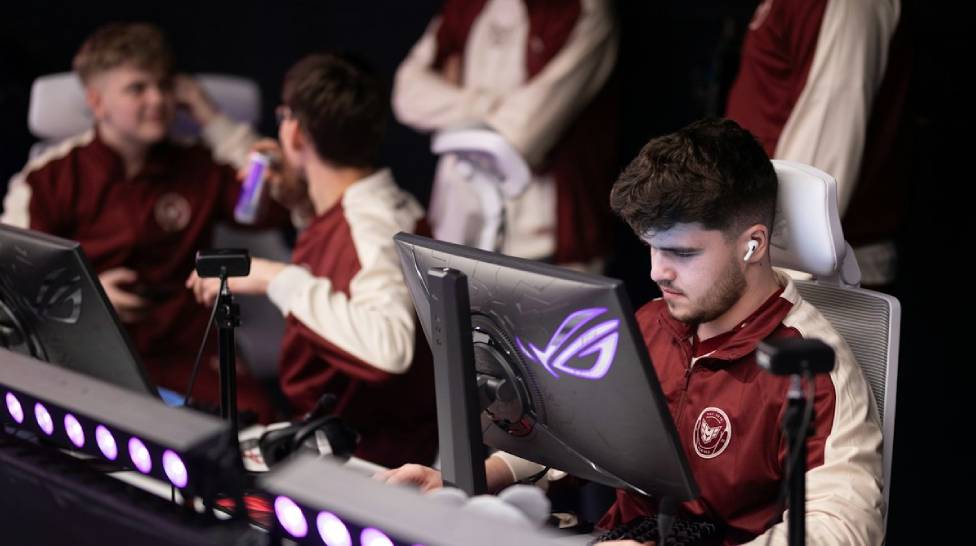
Vitality Academy was established in April 2026 to develop promising young Counter-Strike talent and provide a pathway toward professional competition. Despite the organization's ambitions, the project struggled to achieve consistent results. Following an internal assessment of its future, Vitality concluded that continuing the academy was no longer viable.
Vitality Confirm Academy Closure at the End of 2026
Vitality officially announced the decision on November 19, explaining that the organization had spent time evaluating whether its academy could continue operating under current competitive conditions. The club acknowledged that maintaining development programs had become increasingly difficult and confirmed that its efforts to find a sustainable solution had been unsuccessful.
The academy will remain active until the end of the ongoing ESEA Advanced season before disbanding. Vitality's decision comes less than a year after the project was introduced, highlighting the financial and competitive challenges facing organizations investing in young Counter-Strike players.
Katkame Was the Centerpiece of Vitality's Academy Project
The academy originally attracted attention through Ulysse "Katkame" Thiebault, a 16-year-old French AWPer previously identified by Mathieu "ZywOo" Herbaut as a promising prospect for 2026. The young sniper became one of the central figures in Vitality's development plans, with the organization hoping to support his transition toward higher levels of competition.
The roster also featured Luca-Adrian "lucaZ" Gavrilut, Aleks "Reqqen" Frolov, Patrik "patrenzo" Hauer, and Ionuț "Yoghi" Arba. Spanish coach Pablo "VdaK1NG" Escobar was responsible for guiding the lineup. Ukrainian player Kirill "Dafra1D" Polieiko had previously represented the academy before being moved to the bench in September.
Roster Changes Fail to Improve Vitality Academy Results
Vitality attempted to strengthen the roster in September by replacing Dafra1D with Yoghi, who previously competed for HEROIC Academy. However, the adjustment failed to deliver the expected improvement, and the team continued struggling to establish itself in the European competitive scene.
One of Vitality Academy's few notable achievements was a third-place finish at Majstrovstvá SR, a tournament in Slovakia featuring a €10,000 prize pool. The team also competed in ESEA Advanced, where it held an 8-5 record and occupied 13th place at the time of the closure announcement.
Vitality Players Begin Searching for New Teams
With the academy project approaching its conclusion, the players have started exploring opportunities elsewhere. The announcement leaves several young prospects available to organizations seeking to strengthen their development rosters ahead of the 2027 season.
Katkame is likely to attract attention because of his potential as an AWPer, while the remaining players will also be looking to continue their professional development. Although the academy failed to achieve its original objectives, its members gained experience competing together in European tournaments.
Vitality Closure Highlights Challenges for CS2 Academy Teams
The decision raises broader questions about the sustainability of academy projects in professional Counter-Strike 2. Developing young talent requires investment in coaching, training, travel, and tournament participation, while opportunities to generate revenue can remain limited for teams competing below the highest level.
Vitality's withdrawal demonstrates that even established esports organizations face difficulties maintaining secondary rosters. While the club will continue focusing on its main Counter-Strike team, the closure represents a setback for its youth development ambitions and leaves uncertainty surrounding the future of similar projects.
Vitality Academy Project Set to End in December 2026
Vitality Academy will officially disband after completing its remaining ESEA Advanced commitments. The organization has not announced plans to establish a replacement development team, and the current players are expected to pursue new opportunities.
The closure brings an early end to a project that was intended to support the next generation of Counter-Strike talent. Although Vitality Academy achieved limited competitive success, its short existence highlights the challenges organizations face when balancing player development with financial sustainability in modern esports.